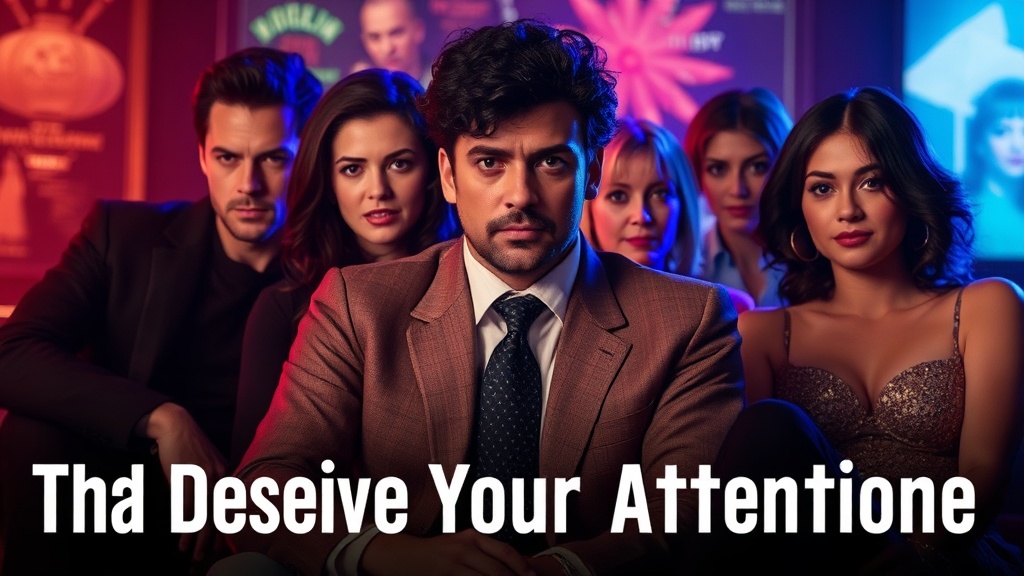
10 Underrated TV Series That Deserve Your Attention
What Makes a TV Show "Underrated" in the Streaming Era?
An underrated series isn't the same as an obscure one. These are shows with genuine craft—strong writing, inventive cinematography, performances that stick with you—that somehow missed the algorithmic jackpot. They didn't dominate watercooler conversations or trend on Twitter. The streaming space rewards momentum over merit, and plenty of exceptional work gets buried under the next Stranger Things or House of the Dragon marketing blitz.
The ten series below represent television at its most adventurous. Some lasted a single season. Others ran for years in relative silence. All of them demonstrate what happens when creative teams prioritize vision over virality. You'll find international productions, forgotten network experiments, and cable dramas that arrived either too early or too late for their moment. Each entry includes where to stream it (as of this writing) and what specific technical or narrative element makes it worth your time.
What Are the Best Overlooked Dramas from the Last Decade?
Halt and Catch Fire (AMC, 2014–2017) tops this category. It's the rare period drama that understands technology not as spectacle but as human expression. Set during the personal computer revolution of the 1980s and early internet boom of the '90s, the series follows a fictionalized Texas tech scene with documentary-level attention to hardware detail.
The camera work deserves special mention. Cinematographer Evans Brown treats circuit boards and CRT monitors with the reverence most shows reserve for sunsets. Episode directors frequently shoot through glass, screens, and reflections—visual layers that mirror how these characters experience the world through technology rather than despite it. Lee Pace and Scoot McNairy anchor the first season, but the show truly ignites when it shifts focus to Cameron (Mackenzie Davis) and Donna (Kerry Bíshé), two women building something in an industry designed to exclude them.
Available on Netflix. All four seasons reward patience—the kind of slow-burn storytelling that prestige television supposedly abandoned.
The Leftovers (HBO, 2014–2017) shouldn't qualify as "underrated." Critics adored it. Damon Lindelof proved he could stick a landing after Lost frustrated so many. Yet the viewing numbers never matched the artistic achievement. The premise—2% of Earth's population vanishes without explanation—sounds like science fiction. The execution is pure character study.
Season 2's "International Assassin" episode ranks among the boldest hours of television ever broadcast. Justin Theroux delivers a performance of barely contained grief that physically hurts to watch. The show asks questions about belief, community, and meaning without pretending to have answers. That's the point. Some voids don't get filled.
Which International Series Are Worth Watching with Subtitles?
Dark (Netflix, 2017–2020) is the German time-travel thriller that makes Lost look like a beach vacation. The first Netflix original produced in Germany, this three-season puzzle box tracks four generations of families in the fictional town of Winden across multiple timelines. The catch? The connections run deeper than blood relations.
Creator Baran bo Odar and his team mapped the entire narrative before shooting a single frame. That planning shows. Every visual detail—the cave system's phosphorescent rocks, the 1986 production design, the recurring bird motifs—serves the story rather than distracting from it. The show demands active viewing. You'll need that notepad. But the payoff delivers genuine emotional catharsis alongside its temporal gymnastics.
Available on Netflix. Watch with subtitles, not dubbing. The German performances—particularly Louis Hofmann as Jonas and Lisa Vicari as Martha—carry subtleties that English voice actors flatten.
Gomorrah (Sky Atlantic, 2014–2021) isn't The Sopranos with better architecture, though lazy comparisons persist. This Italian crime saga operates at street level, tracking the Camorra's grip on Naples through the eyes of Ciro Di Marzio (Marco D'Amore), a foot soldier climbing ranks he doesn't fully understand.
The series rejects romanticized mob mythology. These aren't businessmen with family values—they're violent opportunists in a system that devours everyone eventually. Director Stefano Sollima (who later helmed Sicario: Day of the Soldado) established the visual template: handheld urgency, concrete-gray palettes, sudden violence that arrives without musical warning. The fifth and final season concludes the story with the same nihilistic integrity that defined the first. Nothing here gets redeemed.
Are There Any Hidden Comedy Gems That Actually Hold Up?
Review (Comedy Central, 2014–2017) takes a simple premise and follows it into increasingly dark territory. Andy Daly plays Forrest MacNeil, a "life reviewer" who rates real human experiences—stealing, addiction, leading a cult—at the request of his audience. The fake documentary format isn't new. The commitment to consequences is.
Each episode builds on the last. Forrest doesn't reset between reviews. The damage accumulates. By season three, he's destroyed his marriage, his professional reputation, and several people's lives—all in service of a premise he refuses to abandon. Daly's performance walks a tightrope between sympathetic and monstrous. You'll laugh. Then you'll feel complicit for laughing. That's the design.
Available on most important+. The complete series runs 22 episodes. Binge at your own moral risk.
Party Down (Starz, 2009–2010; 2023) predated the current boom of workplace comedies by a decade. The original two seasons follow a Los Angeles catering team composed of failed actors, blocked writers, and one permanent optimist (Ken Marino) who actually enjoys the work. Adam Scott anchors the ensemble as Henry Pollard, a former commercial actor defined by a single humiliating catchphrase.
The writing room included Rob Thomas (Veronica Mars), Paul Rudd, and John Enbom. Their Hollywood experience bleeds through—every industry party the crew works drips with authentic desperation. The 2023 revival surprised everyone by recapturing the original's chemistry without feeling forced. Worth noting: the six-episode revival doesn't overstay its welcome.
Comparison: Streaming Availability and Episode Counts
| Series | Platform | Seasons | Total Episodes | Average Runtime |
|---|---|---|---|---|
| Halt and Catch Fire | Netflix | 4 | 40 | 47 min |
| The Leftovers | Max | 3 | 28 | 55 min |
| Dark | Netflix | 3 | 26 | 52 min |
| Gomorrah | Max | 5 | 58 | 50 min |
| Review | most important+ | 3 | 22 | 22 min |
| Party Down | Hulu | 3 | 26 | 28 min |
What Short-Lived Series Left the Biggest Impact?
Enlightened (HBO, 2011–2013) lasted twenty episodes. Laura Dern created the series with Mike White (who later made The White Lotus), playing Amy Jellicoe—a corporate executive who suffers a very public breakdown and returns from a Hawaiian wellness retreat determined to change her life and the world. The show asks whether genuine transformation is possible in systems designed to prevent it.
Dern's performance earned a Golden Globe, but viewers stayed away. Too uncomfortable, probably. Amy isn't exactly likable—she's narcissistic, naive, and often cruel while believing herself enlightened. The show doesn't let her off the hook. The cinematography by James Glennon (who shot Deadwood) gives even mundane office spaces unexpected beauty. The second season pivots toward corporate whistleblowing and achieves genuine suspense. Then HBO cancelled it on a cliffhanger that somehow feels appropriate.
Available on Max. Those final moments of the series finale—Dern on a motorcycle, face streaked with tears and determination—rank among the most indelible images in television history.
Lodge 49 (AMC, 2018–2019) shouldn't work. A surfer-dude loser (Wyatt Russell) joins a dusty Lyncean order (think Masonic lodge meets Elks club) in Long Beach, California, searching for meaning after his father's death and his own economic freefall. The tone wavers between melancholy and magical realism. Characters discuss alchemy, plumbing supply economics, and surfboard repair with equal sincerity.
Showrunner Jim Gavin based the series on his own short stories. The result feels like nothing else on television—genuinely kind without being sentimental. The cast includes Brent Jennings as Ernie, a plumbing salesman facing obsolescence, and Sonya Cassidy as Liz, drowning in student debt from a degree she never finished. The show understands that American decline isn't cinematic. It's dental appointments you can't afford and job interviews that go nowhere. AMC cancelled it after two seasons despite critical raves. The fan campaign to save it failed. That said, what's there stands complete enough.
Which Recent Series Deserve More Attention?
Severance (Apple TV+, 2022–present) technically doesn't qualify as "underrated" given the Emmy recognition and online discourse. Here's the thing: the viewership numbers remain surprisingly modest for a show this conversation-dominating. Ben Stiller directs with clinical precision, creating a retrofuturist office environment where employees undergo "severance"—a surgical procedure that divides their work memories from their personal ones.
The production design deserves its own dissertation. The Lumon offices combine mid-century brutalism with sterile corporate aesthetics. Hallways stretch to impossible vanishing points. The " Macrodata Refinement" department processes numbers whose meaning remains deliberately opaque. Adam Scott plays dual versions of Mark Scout—one grieving his wife, the other blissfully unaware she existed. The season one finale executes one of the most audacious structural gambits in recent memory. Season two arrives soon. Catch up now before the conversation overwhelms you.
Available on Apple TV+.
Somebody Somewhere (HBO, 2022–present) might be the gentlest show currently airing. Bridget Everett stars as Sam, a middle-aged woman processing her sister's death while reconnecting with her Kansas hometown. The series rejects every narrative shortcut—no tidy romance, no career redemption arc, no villain to overcome.
Instead, Sam builds community slowly. She joins a choir group for misfits led by Joel (Jeff Hiller), a gay man negotiating his own complicated family relationships. The conversations unfold in kitchens, parking lots, and big-box store break rooms. Director Jay Duplass shoots everything with available light and minimal coverage, giving scenes the texture of documentary rather than scripted television. It's the rare series that trusts you to recognize human behavior without dramatic scoring to tell you how to feel.
Where Should You Start with This List?
Your entry point depends on your current appetite. Need something propulsive and mysterious? Dark delivers 26 episodes of escalating intrigue. Want emotional devastation with your sci-fi? The Leftovers waits. Prefer laughter that stings? Review and Party Down pair beautifully as a double feature of professional humiliation.
Here's the thing about underrated television: these shows survived cancellation, low ratings, and algorithmic obscurity because they connected with someone. The writers cared. The directors composed shots rather than coverage. The actors treated material seriously even when the premises sounded ridiculous. That's the craft that separates disposable content from actual art.
Your streaming queue is already too long. Everyone's is. But these ten series offer something the trending tabs don't—surprise. The genuine kind that comes from not knowing where a story plans to take you. Start anywhere. Just don't blame me when you emerge three days later wondering why more shows don't trust their audiences this completely.
"The best television doesn't explain itself. It invites you to lean closer." — Television critic Matt Zoller Seitz