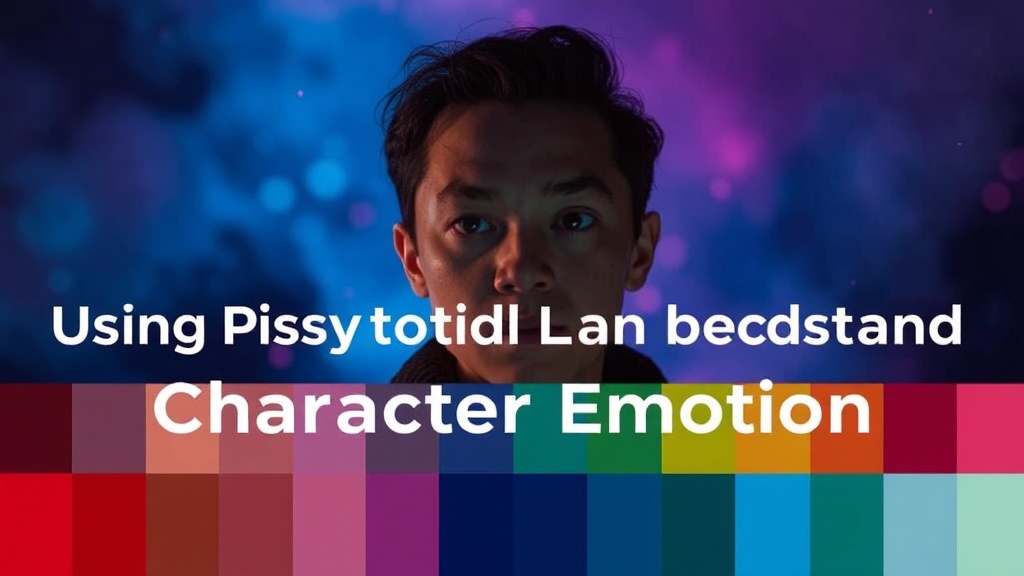
Decoding Color Palettes: Using Visual Language to Understand Character Emotion

Quick Tip
Pay attention to dominant color shifts to track a character's psychological journey.
Decoding Color Palettes: Using Visual Language to Understand Character Emotion
Have you ever wondered why a certain scene feels suffocating even before a single line of dialogue is spoken? The answer rarely lies in the script alone; more often, it is hidden in the color grade. Filmmakers use color palettes not just to make a shot "look pretty," but as a sophisticated psychological tool to signal shifts in a character's internal state.
The Psychology of Temperature and Saturation
Color theory in cinema operates on two primary axes: temperature (warm vs. cool) and saturation (vibrant vs. muted). When a director wants to isolate a character, they often manipulate these settings to create a sense of detachment or intensity.
- The Warm Palette (Reds, Oranges, Yellows): These tones evoke heat, passion, or danger. Think of the aggressive, high-saturation amber tones in Mad Max: Fury Road. The color isn't just showing us a desert; it is communicating a constant state of survival and adrenaline.
- The Cool Palette (Blues, Cyans, Teals): These are used to signal isolation, melancholy, or clinical sterility. In many sci-fi films, a heavy teal tint is used to make environments feel technologically advanced yet emotionally hollow.
- Desaturation: By stripping the color out of a frame, filmmakers can signal trauma or the loss of hope. A low-saturation palette suggests a world that has lost its vitality, often used in gritty war dramas to strip away any sense of romanticism.
Color as Character Arc
A truly great film uses color to track a character's journey. A character might start a film in a world of bright, saturated primary colors—representing innocence or stability—and slowly transition into a monochromatic or muted palette as they face psychological decay. This visual shorthand allows the audience to "feel" the character's descent without needing an explicit monologue.
"Color is the keyboard, the eyes are the harmonies, the soul is the piano." — Wojciech Has
To practice this, watch a single sequence from a film like Parasite. Notice how the lighting and color shifts as the social dynamics between the families change. Pay attention to how the palette moves from the bright, natural light of the upper-class home to the claustrophobic, sickly greens and shadows of the basement. Understanding these shifts turns a passive viewing experience into an active study of visual storytelling.