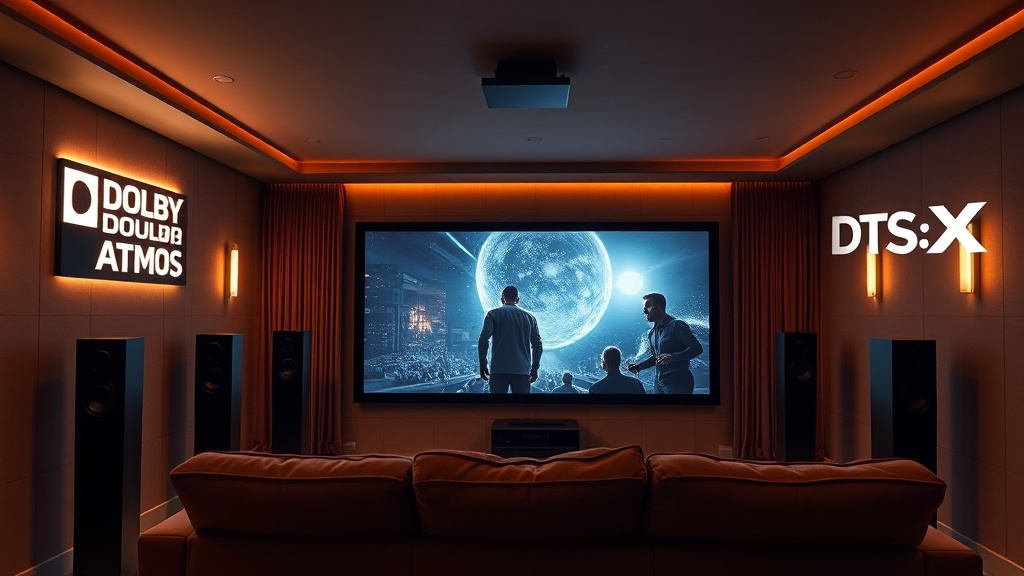
Dolby Atmos vs DTS:X 2026: Which Immersive Audio Format Wins for Home Theaters

What’s the core difference between Dolby Atmos and DTS:X?
At first glance, Dolby Atmos and DTS:X look like two sides of the same coin – both promise object‑based, three‑dimensional sound that makes you feel like you’re right in the middle of the action. The real difference lies in how they engineer speaker placement and handle channel flexibility. Dolby Atmos, born in the cinema world, defines a baseline grid of up to 128 audio objects and expects a specific speaker layout (usually 7.1.4 or 9.1.6). DTS:X, on the other hand, was designed for the home from the start and lets you mix‑and‑match speakers without a rigid grid, making it a bit more forgiving for unconventional rooms.
Which format delivers the most immersive experience in a typical 2026 living‑room setup?
For a standard 5.1.2 or 7.1.4 home theater, Dolby Atmos tends to pull ahead because its object‑based rendering is tightly integrated with most modern AV receivers. The best soundbars of 2026 often come with Atmos‑enabled up‑mixing, giving you that overhead feel without adding ceiling speakers. DTS:X shines when you have a non‑standard layout – say, a bookshelf speaker on the left, a sleek dip‑away speaker on the right, and a pair of upward‑firing modules tucked behind a floating shelf. It will still create a convincing sound field where Atmos might struggle.
How do the two formats handle content compatibility?
Dolby Atmos enjoys a broader library. Major streaming services – Netflix, Disney+, Amazon Prime – label a good chunk of their new releases as "Atmos‑enabled." DTS:X content is less common, but the loudness lie article highlighted that many theatrical mixes still ship in Atmos, with DTS:X often relegated to Blu‑ray extras. If you’re building a system for the widest possible catalog, Atmos is the safer bet.
What about equipment costs and future‑proofing?
Both formats require an AV receiver that supports the respective decoding. In 2026, you can grab a budget‑friendly receiver with Atmos for under $300, while DTS:X‑only models tend to sit a bit higher, though the price gap is narrowing. Looking ahead, Dolby is pushing the new "Atmos Height Virtualization" that simulates overhead speakers with fewer physical drivers. DTS:X is betting on its flexible speaker map to stay relevant as home designs evolve.
Which format should you choose for your 2026 home theater?
Bottom line: Pick Dolby Atmos if you want the widest content support and a straightforward speaker plan. If your room is a bit wonky or you love tinkering with speaker placement, DTS:X offers the adaptability you crave. Either way, you’ll be stepping up from stereo to a truly immersive experience – and that’s what every cinephile deserves.
What are the most common pitfalls when setting up Atmos or DTS:X?
- Skipping calibration. Both formats rely on precise speaker distances and levels. Use a calibrated mic or a trusted room‑EQ system.
- Over‑loading your receiver. Don’t cram more channels than the processor can handle – it leads to dropped objects and muddy sound.
- Ignoring room acoustics. Hard surfaces will bounce sound; add curtains or acoustic panels to tame reflections.
Ready to upgrade? Quick‑hit checklist
- Confirm your AV receiver lists both Dolby Atmos and DTS:X support.
- Choose a speaker layout: 5.1.2 for Atmos simplicity, or a flexible 7.1.4 for DTS:X freedom.
- Run the built‑in auto‑calibration (or use a calibrated mic) to set distances.
- Test with a known Atmos demo (e.g., Dolby Atmos vs DTS:X demo) and tweak as needed.
- Enjoy the immersive world – the goal is to feel the film, not just hear it.
FAQ
Q: Can I use the same speakers for both Dolby Atmos and DTS:X?
A: Absolutely. Most modern speakers are "object‑compatible" and will work with either format as long as your receiver can decode both.
Q: Do I need ceiling speakers for Atmos?
A: Not strictly. Up‑firing modules can simulate overhead effects, but true ceiling speakers give the most precise placement.
Q: Is there a noticeable difference in gaming?
A: Yes. Games that support object‑based audio (e.g., recent Call of Duty titles) often sound more precise in Atmos, but DTS:X’s lower latency can give a slight edge in fast‑paced shooters.
Whether you’re chasing the perfect movie night or looking to level up your gaming rig, the battle between Dolby Atmos and DTS:X is the audio showdown you’ll want on your watchlist. Grab your gear, calibrate, and let the sound take you to the edge of the screen.