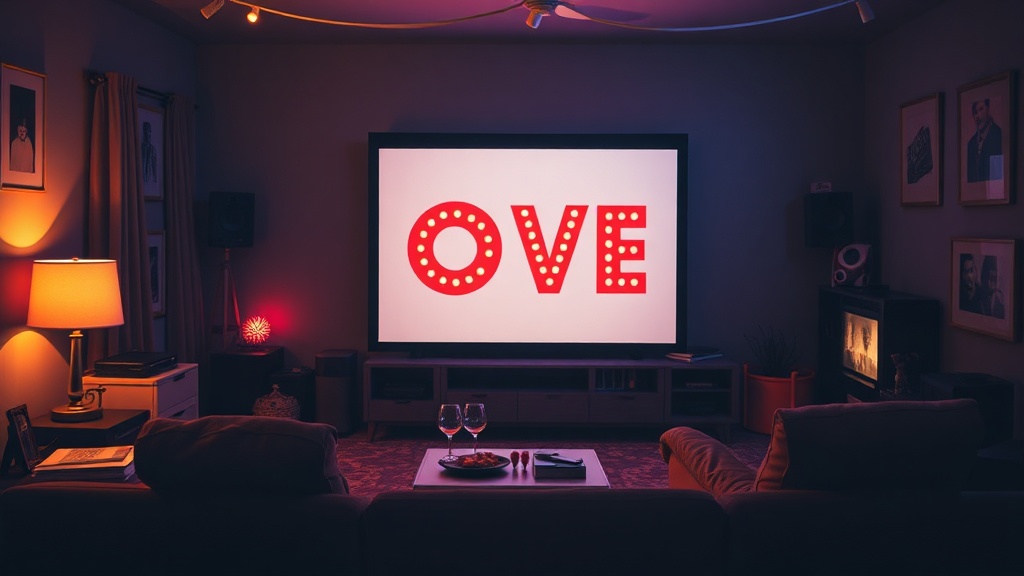
How to Host the Perfect At-Home Movie Marathon Night

Hosting a proper at-home movie marathon isn't just hitting "play" three times in a row—it's about creating an immersive theatrical experience that rivals (and sometimes beats) the multiplex. This guide covers everything from room setup and projector calibration to thematic programming and intermission strategies. Whether you're planning a Lord of the Rings extended edition endurance test or curating a night of 1970s paranoid thrillers, these techniques will transform your living room into a legitimate cinema sanctuary.
What Equipment Do You Need for a Home Movie Theater Experience?
The short answer: a decent display, proper sound, and controlled lighting. The long answer? That's where the magic happens.
Start with the screen. If budget allows, the Epson Home Cinema 2350 projector delivers 1080p brightness that cuts through ambient light—crucial when someone inevitably opens the fridge mid-movie. At $799, it's not cheap, but compare that to ticket prices for four people over a year. For smaller spaces, a 65-inch LG C3 OLED ($1,796) provides inky blacks that make Blade Runner 2049 look like it was painted directly onto the panel.
Sound matters more than picture—honestly. The Sonos Arc soundbar ($899) with Sub ($799) creates genuine theater rumble without the wire spaghetti of traditional surround setups. That said, a dedicated AV receiver like the Denon AVR-X1700H ($649) paired with KEF Q150 bookshelves ($599/pair) gives you proper channel separation for dialogue clarity. Nothing kills a marathon faster than constantly adjusting volume between whispered conversations and explosive set pieces.
Lighting control separates amateurs from operators. Blackout curtains from Amazon Basics ($35-$80 depending on window size) block streetlight pollution. Add bias lighting—Philips Hue Play bars ($129) behind the display reduce eye strain during those 11-hour Fast & Furious retrospectives.
| Budget Tier | Display | Audio | Total Cost |
|---|---|---|---|
| Entry ($500) | TCL 55" 4K Roku TV ($349) | Vizio V-Series 2.1 ($149) | ~$500 |
| Mid-Range ($2,000) | Epson Home Cinema 2350 ($799) | Sonos Beam Gen 2 ($499) + IKEA Symfonisk surrounds ($230) | ~$1,528 |
| Enthusiast ($5,000+) | Sony VPL-XW5000ES 4K Projector ($5,999) | Klipsch Reference Premiere 5.1.2 ($3,500) | ~$9,500 |
(Don't forget streaming device compatibility—older smart TV interfaces lag. The Apple TV 4K or NVIDIA Shield Pro eliminates buffering frustration when switching between HBO Max, Criterion Channel, and your Plex server.)
How Do You Choose the Right Movies for a Marathon?
Programming determines whether guests leave energized or exhausted. The secret? Curate with intention—never randomize.
Three proven approaches exist. Thematic marathons connect films through subject matter: heist movies (Heat, Thief, Inside Man), apocalyptic dread (Children of Men, 28 Days Later, The Road), or specific directors (Paul Thomas Anderson's San Fernando Valley trilogy). Franchise runs work for comfort viewing—Mission: Impossible or Mad Max build kinetic momentum. The most challenging? Chronological cinema history—watching Citizen Kane followed by Vertigo followed by The Godfather reveals how visual grammar evolved across decades.
The catch? Runtime mathematics. A true marathon means three or more films. Here's the thing: the human attention span degrades significantly after four hours. Structure accordingly:
- The Opener: 90-100 minutes, accessible, sets the tone without demanding maximum concentration
- The Main Event: Your longest or most demanding film—place this when energy peaks, usually second
- The Closer: Shorter, preferably something the group has seen before (comfort rewatches hit different at 1 AM)
Worth noting: genre mixing fails more often than it succeeds. Jumping from Hereditary to Bridesmaids creates tonal whiplash. Stay in one lane—or transition carefully through related tones (horror to psychological thriller to noir works; horror to romantic comedy does not).
For programming inspiration, consult Letterboxd user lists—curators there have spent years perfecting thematic connections. The Criterion Channel's "Collections" feature also demonstrates professional programming logic worth studying.
What's the Best Way to Schedule Breaks During a Movie Marathon?
Intermissions aren't optional—they're structural requirements for marathons exceeding three hours.
The biological reality: bladders fill, blood sugar crashes, and the human eye needs distance-focus time after prolonged screen exposure. Schedule a 15-minute break after every film (minimum) and a 30-minute meal intermission at the halfway point. The Lehman Meriwether method—named after a projectionist who pioneered theatrical comfort optimization—suggests timing breaks at natural narrative beats, never mid-scene.
Food strategy matters. Heavy carbs induce drowsiness—that massive pasta spread seemed brilliant at 6 PM, but by 9:30, everyone's fighting serotonin crashes. Opt for protein-forward grazing: charcuterie boards, sliders, popcorn with Flavacol seasoning (the actual stuff theaters use—$7 for a years-long supply on Amazon). Hydration is equally critical; alternate alcoholic beverages with water or LaCroix to maintain alertness through that Lawrence of Arabia 4K restoration.
Physical positioning prevents the marathon meltdown. Reclining sofas like the Seatcraft Diamante ($2,199) offer theater-style powered recline with USB charging. More practical? Floor cushions and bean bags from Lovesac ($375-$1,200) allow position changes—crucial for circulation during extended sit sessions.
Here's a sample schedule for a five-film noir marathon (total runtime: 9 hours 47 minutes):
- 6:00 PM: The Maltese Falcon (1941) — 100 min
- 7:45 PM: Break — 15 min
- 8:00 PM: Double Indemnity (1944) — 107 min
- 9:50 PM: Dinner intermission — 30 min
- 10:20 PM: Laura (1944) — 88 min
- 11:50 PM: Break — 15 min
- 12:05 AM: Out of the Past (1947) — 97 min
- 1:45 AM: Break — 15 min
- 2:00 AM: The Third Man (1949) — 104 min — Final film
(Notice the runtime acceleration toward the end—shorter films maintain momentum as fatigue sets in.)
How Can You Improve Picture and Sound Quality for Home Viewing?
Calibration transforms good equipment into exceptional experiences. Most TVs ship in "Vivid" or "Store Display" modes—aggressive, blue-tinted, and brutal on accurate color reproduction.
Start with Spears & Munsil UHD HDR Benchmark ($39)—a calibration disc featuring test patterns for brightness, contrast, and color accuracy. For projectors, the Disney WOW: World of Wonder disc ($25) provides excellent grayscale calibration tools. If that feels excessive, RTINGS.com publishes specific settings for thousands of TV models—input their recommended numbers and immediately improve image accuracy by 70%.
Audio calibration matters equally. Run your receiver's room correction software—Audyssey (Denon/Marantz), AccuEQ (Onkyo), or YPAO (Yamaha). These systems play test tones through each speaker, measuring room acoustics and applying EQ curves. The improvement in dialogue intelligibility alone justifies the ten-minute setup process.
Streaming quality varies wildly. Netflix's 4K tier (Premium plan, $22.99/month) delivers approximately 16 Mbps streams—acceptable but compressed. Physical media still reigns: a 2001: A Space Odyssey 4K UHD Blu-ray ($29) contains nearly 100 Mbps of video data with Dolby Vision HDR. For cinephile marathons, the difference between streaming and disc is the difference between hearing music through phone speakers versus studio monitors.
"The best projection booth operators were invisible—you never noticed the splice, never caught the changeover. Your home setup should achieve the same transparency. Technology disappears; only story remains."
What Are Common Movie Marathon Mistakes to Avoid?
Even experienced hosts stumble. Learn from these failures.
Phone etiquette disasters: Nothing fractures immersion like notification buzzes. Designate a "phone bowl" by the entrance—first person to touch their device during a film handles snack refills. Extreme? Perhaps. Effective? Absolutely.
Over-inviting: Marathon dynamics shift dramatically beyond six people. Conversation fragments, sidebar commentary multiplies, and the communal experience dissolves into separate whispered conversations. Cap attendance at six—or establish strict "film first, chat during breaks" rules.
Ignoring aspect ratio: Watching The Grand Budapest Hotel cropped to 16:9 should be criminal. Set your player to output original aspect ratio, even with black bars. Those "black bars" (actually called letterboxing) preserve the director's intended composition. Park Circus distributes restored classic films—study their aspect ratio guides before screening vintage cinema.
Neglecting HVAC: Eight hours in a sealed room with multiple bodies generates heat and CO2. Set temperature lower than comfortable initially—body heat accumulates. Crack a window or run air circulation between films.
The ultimate mistake? Forgetting why you're doing this. Technical perfection means nothing without emotional engagement. That flickering projector bulb, the imperfect speakers, the slightly misaligned screen—these imperfections become part of the memory. Cinema isn't about equipment; it's about shared experience in darkness, strangers (or friends) united by light thrown across a wall.
So calibrate carefully, program thoughtfully, and break strategically—but when the lights dim, let the movies do what they've always done best: transport you somewhere else entirely.
Steps
- 1
Choose Your Theme and Curate Your Movie Lineup
- 2
Set Up Your Viewing Space for Maximum Comfort
- 3
Prepare Themed Snacks and Refreshments