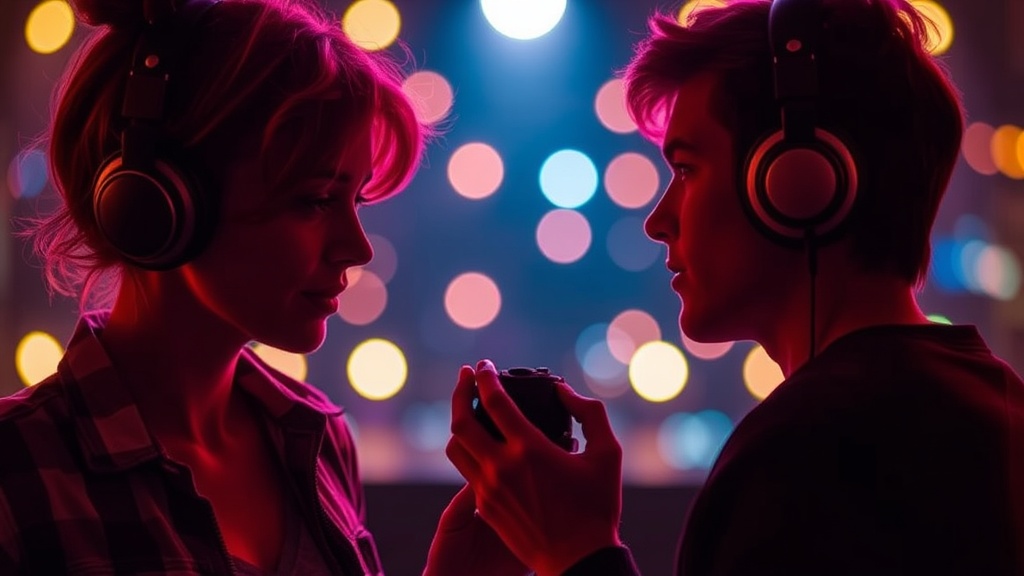
Stop Relying on the Soundtrack for Every Single Emotion

Quick Tip
Pay attention to the sounds occurring within the world of the movie rather than just the background score.
You’re going to learn why over-reliance on a non-diegetic score can actually weaken your storytelling and how to use silence to sharpen your film's emotional impact. Relying solely on a swelling orchestra to tell the audience how to feel is a shortcut that often backfires—it makes the scene feel manipulated rather than earned.
Why does heavy music ruin a scene?
Heavy music ruins a scene by telling the audience exactly what to feel before the actors have even finished their lines. It’s a lack of trust in your footage. If you have a shot of a character weeping and you layer a weeping violin over it, you aren't enhancing the grief—you're just shouting it in the viewer's face.
Think about the difference between diegetic and non-diegetic sound. When the sound comes from within the world of the film—a radio in the corner or a character humming—it feels organic. When a score dictates every heartbeat, the audience stops watching the performance and starts watching the manipulation.
The best moments often happen in the gaps. A quiet room can feel much more suffocating than a room filled with low-frequency drones. It’s the difference between a subtle nudge and a shove.
How can silence improve your storytelling?
Silence improves storytelling by creating tension and forcing the audience to focus on the micro-expressions of your actors. When the music cuts out, the audience leans in. They start listening to the sound of breathing, the rustle of clothing, or the hum of a refrigerator.
Try these three techniques to balance your soundscape:
- The Hard Cut: Abruptly stop the music during a moment of high tension to leave the viewer feeling exposed.
- The Diegetic Bridge: Use a sound that already exists in the scene (like a ticking clock) to build rhythm instead of a synthetic beat.
- The Low Drone: Instead of a melody, use a single, barely audible tone to create unease without being obvious.
If you're interested in how visual choices affect the viewer's perception, check out my previous breakdown on deconstructing aspect ratios in cinema. It’s the same principle: less is often more.
What is the difference between a score and sound design?
A score is the musical composition, while sound design is the manipulation of all audible elements within the film's environment. A great filmmaker knows that a well-placed footstep or a distant dog bark can be more evocative than a full symphony.
| Element | Function | Emotional Effect |
|---|---|---|
| Score | Direct emotional guidance | High (Can feel "forced") |
| Ambient Sound | World-building | Subtle (Builds immersion) |
| Silence | Emphasis/Isolation | Extreme (Creates tension) |
Don't be afraid to let a scene breathe. If the acting is good, the music shouldn't have to do the heavy lifting. Trust your footage.