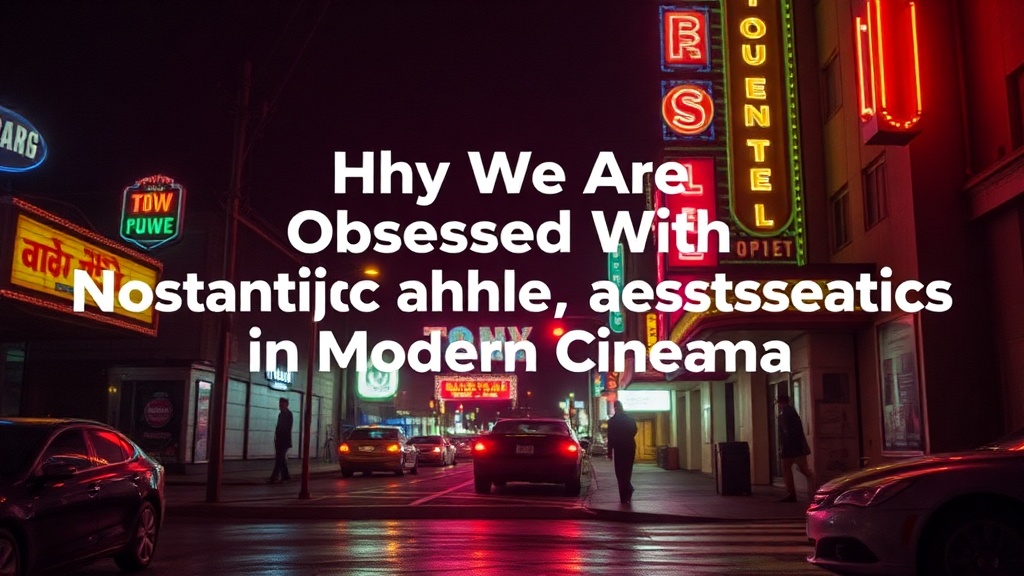
Why We Are Obsessed With Nostalgic Aesthetics in Modern Cinema

The screen flickers with the warm, unstable grain of 16mm film. The colors are slightly desaturated, leaning heavily into amber and teal, and there is a subtle chromatic aberration hugging the edges of the frame. You aren't watching a modern digital production; you are watching a film that is intentionally mimicking the technical "imperfections" of the 1970s and 80s. This post explores why contemporary filmmakers are moving away from the sterile perfection of high-resolution digital sensors and leaning into nostalgic aesthetics, and how these visual choices manipulate our emotional connection to a story.
The Death of Digital Perfection
Digital cinematography, particularly with high-end sensors like the Arri Alexa or the Sony Venice, is capable of capturing an almost terrifying level of clarity. While this is a technical marvel, it often results in a "clinical" look. When a frame is too sharp, the human eye perceives it as artificial or hyper-real. This lack of texture can create a psychological distance between the viewer and the subject. To combat this, directors are using various techniques to reintroduce "texture" into their frames.
One of the primary ways filmmakers achieve this is through the use of vintage glass. Instead of using modern, ultra-sharp prime lenses, cinematographers are opting for older lenses like the Cooke Speed Panchros or Zeiss Super Speeds. These older lenses have unique characteristics—lens flares, softer edges, and a specific way of handling light—that digital sensors cannot naturally replicate. This choice isn't just about a "look"; it’s about adding a layer of organic imperfection that feels more human and less processed.
If you want to understand how these technical choices change the way a story is told, you should learn how to analyze movie cinematography like a pro. Understanding the difference between a sharp digital edge and a soft, vintage bokeh is the first step in seeing the intentionality behind the camera.
The Psychology of the "Warm" Palette
Nostalgia is not just a feeling; it is a color palette. In modern cinema, we see a recurring trend of heavy color grading that favors certain eras. For instance, the "Stranger Things" aesthetic relies heavily on the neon blues and deep oranges of the 1980s. This isn't an accident. Warm tones—specifically oranges, yellows, and soft reds—are psychologically linked to comfort, safety, and the past. Conversely, the cooler, sterile blues often represent the clinical, disconnected present.
Filmmakers use these palettes to signal to the audience that they are in a "safe" or "known" space. When a director uses a heavy grain overlay or a slight halation effect (the way light bleeds around bright objects), they are triggering a subconscious recognition of analog film. This creates a sense of "pre-digital" warmth. Even when shot on a digital medium, the post-production process is heavily focused on recreating the chemical look of Kodak or Fujifilm stocks.
Techniques for Recreating Analog Textures
- Film Grain Emulation: Using software like Dehancer or FilmConvert to add organic-looking grain rather than digital noise.
- Halation: Adding a red glow around high-contrast edges to mimic the way light interacts with film emulsion.
- Gate Weave: Introducing a subtle, irregular movement to the frame to simulate the physical movement of film through a projector.
- Bloom: Softening the highlights to prevent the "harshness" often found in digital footage.
The Rise of the "Lo-Fi" Aesthetic in High-Budget Cinema
It might seem counterintuitive that a multi-million dollar production would want to look "low quality," but the rise of the "Lo-Fi" aesthetic is a direct response to the saturation of high-definition content. We are currently living in an era of visual overstimulation. When every smartphone camera can capture 4K video, the "specialness" of high resolution is diminished. Filmmakers are finding that "lower" fidelity can actually feel more premium and artistic.
Consider the work of directors like Greta Gerwig or Wes Anderson. While their technical execution is flawless, their visual language is deeply rooted in a stylized, almost storybook version of the past. They use highly controlled color palettes and symmetrical compositions that feel more like a memory or a painting than a literal recording of reality. This "heightened reality" is a hallmark of nostalgic cinema. It tells the viewer that what they are seeing is a curated experience, not just a raw observation.
This trend also extends to the way we consume film. The desire for something "tangible" has led to a resurgence in the appreciation of physical media. If you find yourself craving the specific texture and warmth of these films, you might find value in why you should start collecting physical media again. There is a fundamental difference between streaming a compressed file and watching a high-bitrate Blu-ray that respects the original color grading and grain structure intended by the filmmakers.
Why We Crave the Uncanny Valley of the Past
The obsession with nostalgia in film is often a way for audiences to process the rapid pace of technological change. As we move further into an era of AI-generated imagery and hyper-realistic CGI, the "flaws" of the past become a tether to reality. A scratched film frame or a slightly out-of-focus shot serves as a reminder of a physical world that existed before everything became data.
This is why "Retro-Futurism" is such a powerful tool. Films like Blade Runner 2049 or even the aesthetics found in Dune blend advanced technology with tactile, weathered textures. They aren't "clean" futures; they are "used" futures. This makes the world-building feel lived-in and authentic. When a world looks used, it feels real. When it looks too perfect, it feels like a simulation.
The Impact of Sound on Nostalgia
While we often focus on the visual, the auditory component of nostalgic aesthetics is equally vital. The "warmth" of a film is often a combination of the visual grain and the sonic texture. This includes:
- Analog Synthesizers: The use of Moog or Prophet synths to create textures that feel organic and slightly unstable.
- Tape Saturation: Adding a slight hiss or a "wobble" to the audio to mimic the sound of magnetic tape.
- Orchestral Warmth: Moving away from sterile, digital orchestral libraries and toward recordings that capture the room's natural acoustics.
The Commercialization of Nostalgia
We cannot ignore the fact that the nostalgia aesthetic is a highly profitable tool for studios. It is a "safe" bet. When a film uses a visual language that an audience already associates with their childhood or a "golden age" of cinema, the emotional heavy lifting is already partially done. The audience enters the theater with a pre-loaded sense of comfort and familiarity.
However, there is a fine line between using nostalgia to enhance a story and relying on it as a crutch. When a film uses a 1980s synth score and a neon color palette without any substantive storytelling, it becomes "aesthetic porn"—visually pleasing but emotionally hollow. The most successful modern films use these tools to deepen the themes of the story, rather than just to decorate it. They use the past to illuminate the present, rather than just to hide it.
Ultimately, the obsession with nostalgic aesthetics in modern cinema is a testament to the power of imperfection. In an age where we can simulate almost anything, the most valuable thing a filmmaker can offer is a sense of texture, a sense of weight, and a sense of history. Whether it's through a vintage lens, a grain overlay, or a warm color grade, these technical choices remind us that the best stories are often the ones that aren't quite perfect.