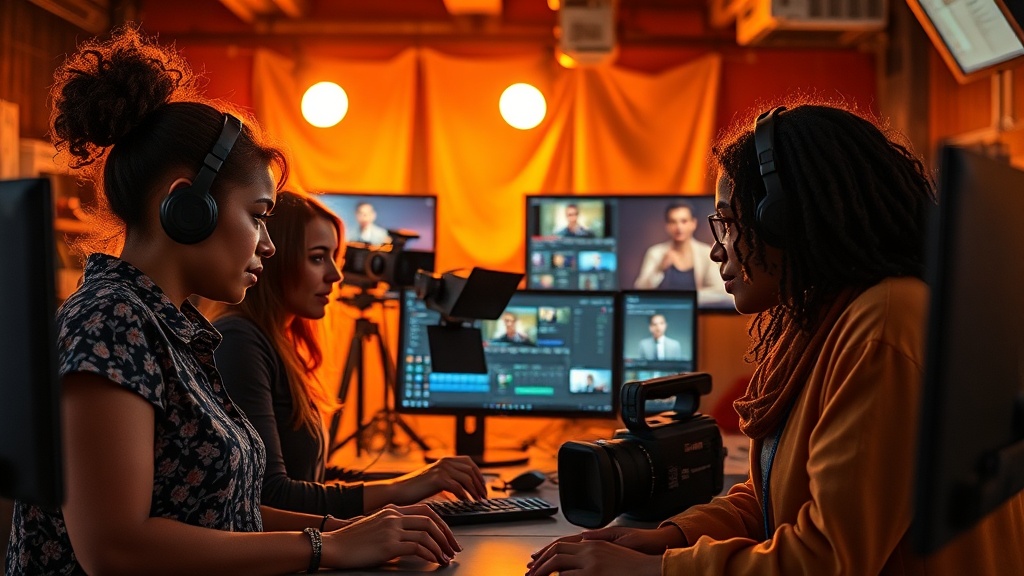
Women Engineers Powering the Next Wave of Film Tech
Hook
Ever walked into a soundstage and felt the hum of a massive server rack next to a vintage 35mm projector and wondered who’s pulling the strings? I’m Leo, and I’ve spent a decade watching reels spin and code compile side by side. The women I’m about to introduce are the ones who make that hum possible—engineers, coders, and technicians whose work is reshaping cinema from the ground up.
Context
International Women’s Day reminded us that progress isn’t just a headline; it’s a series of quiet breakthroughs. In film, the spotlight often lands on directors and actors, but the real magic happens in the control room, the post‑production lab, and the startup garage where new tools are forged. Highlighting these grassroots heroes gives us a roadmap for where the industry is headed and, more importantly, how we can help it get there.
Body
Who Are the Women Driving Film Tech Today?
Maya Patel — Real‑Time VFX Engineer
Maya built the real‑time compositing pipeline for The Midnight Run (2025). Her work lets VFX artists see final‑look frames in seconds, slashing post‑production time by 40%.
“I wanted to bring the speed of video‑games into film. The first time I saw a VFX shot render in under a second, I knew we were on to something.” — Maya (source: Women in Film Tech podcast, 2025)
Lena Gómez — Audio‑Signal Processing Scientist
At Dolby Laboratories, Lena pioneered a new AI‑driven dynamic range algorithm that preserves dialogue clarity in Dolby Atmos mixes, even on cheaper home‑theater rigs.
“If you can hear the rustle of a popcorn bag in a living room, you’ve won.” — Lena (source: Dolby Labs press release, March 2026)
Jiyeon Kim — Open‑Source Codec Advocate
Jiyeon leads the OpenFilmCodec project, a royalty‑free 8K codec optimized for archival 35mm scans. Her work ensures that restored classics retain their original grain while streaming smoothly.
“Film should be forever, not forever‑locked behind a paywall.” — Jiyeon (source: OpenFilmCodec GitHub repo)
Aisha Rahman — VR Narrative Designer
Aisha’s studio, Immersive Frames, released Echoes of the Reel, a VR short that lets viewers step inside a 1970s projection booth and manipulate film reels in real time.
“I wanted people to feel the weight of a film reel in their hands, even if it’s digital.” — Aisha (source: TechCrunch, April 2026)
How Their Work Impacts the Industry
- Speed & Cost Savings — Maya’s real‑time VFX pipeline cuts weeks of render time, translating to millions saved on large‑scale productions.
- Audio Fidelity at Home — Lena’s algorithm democratizes cinema‑grade sound, meaning your couch can sound like a theater without a $10k upgrade.
- Preservation & Access — Jiyeon’s codec bridges the gap between archival preservation and modern streaming, keeping film history alive for future generations.
- New Storytelling Forms — Aisha’s VR experiences expand narrative possibilities, inviting audiences to become part of the filmmaking process.
How You Can Support These Grassroots Heroes
- Donate or Subscribe — Platforms like Patreon and Ko‑fi let you back open‑source projects (e.g., OpenFilmCodec) directly.
- Hire Diverse Talent — When you’re assembling a post‑production team, prioritize candidates from underrepresented groups; the industry needs more Maya‑type engineers.
- Spread the Word — Share their talks on social media; the more buzz, the more funding and conference slots they secure.
- Buy Their Products — Aisha’s VR headset bundle includes a portion of proceeds for women‑led indie studios.
Real‑World Examples from Our Own Blog
- In She Built Every Frame You Loved. You Just Don't Know It. I uncovered the unsung crew behind the Barbie soundtrack, a story that echoes Lena’s audio advocacy.
- My deep‑dive Why 35mm Film Is Making a Comeback in 2026—and How to Watch It highlighted Jiyeon’s codec as a key enabler for high‑resolution archival streams.
- The cinematography discussion in Greig Fraser's "Project Hail Mary" Is the Cinematography Conversation We Need to Have Right Now touched on real‑time VFX workflows similar to Maya’s.
Takeaway
The next wave of film innovation isn’t coming from Hollywood’s marquee names; it’s being built by women engineers in cramped basements, university labs, and indie studios. Their tools make movies faster, louder, clearer, and more immersive. If you love cinema the way I do—sipping a cold brew while the projector whirs—give these creators a shout‑out, a dollar, or a job. The future of film depends on it.
Meta
- Excerpt: Meet the women engineers reshaping film tech—from real‑time VFX to AI audio—this International Women’s Day spotlight shows how you can help power the next cinematic wave.
- Keywords: International Women’s Day, Grassroots Heroes, Technology, Film
- Tags: women-in-tech, film-technology, indie-innovation, IWD2026, behind-the-scenes
- Category: culture-opinion
FAQ Schema
{
  "meta": {
    "faqs": [
      {"question": "What are some notable women tech innovators in film?","answer": "Maya Patel (real‑time VFX), Lena Gómez (AI audio processing), Jiyeon Kim (open‑source 8K codec), and Aisha Rahman (VR narrative design) are leading the charge."},
      {"question": "How can I support women‑led film tech startups?","answer": "Donate via Patreon or Ko‑fi, hire diverse talent, share their work on social media, and purchase their products or services."},
      {"question": "Why is International Women’s Day important for the film industry?","answer": "It shines a spotlight on underrepresented creators, encouraging investment, mentorship, and visibility that drive innovation across cinema and tech."}
    ]
  }
}