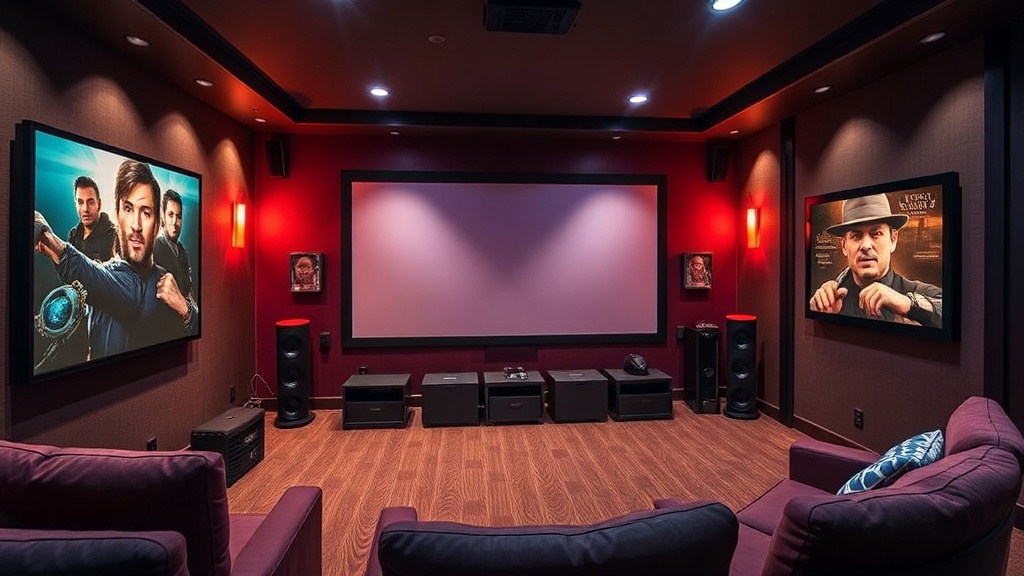
How to Build a Home Theater on a Budget

Imagine you’ve just finished a long day, you’ve settled into your couch, and you hit play on a modern masterpiece like Dune: Part Two. Instead of being swept away by the scale of the desert, you’re distracted by a glare from your window, a thin, tinny sound coming from your TV speakers, and a cramped seating arrangement that makes your neck ache. This is the difference between "watching a movie" and "experiencing cinema." Building a home theater doesn't require a commercial-grade Christie projector or a professional acoustic engineer; it requires a strategic approach to your room's physics and a smart allocation of your budget. This guide breaks down how to prioritize your spending to get the most cinematic impact out of your living space.
Prioritize the Visual Foundation
The screen is the centerpiece of the experience. When you are working with a limited budget, you have to decide between a large-format television or a projector setup. For most people living in standard apartments or suburban homes, a high-quality 4K LED or OLED television is the smarter initial investment because it offers better brightness and easier setup.
The TV vs. Projector Debate
If you want to watch movies in a room with some ambient light, go with a TV. A mid-range OLED, like the LG C3 series, provides near-perfect black levels. In a dark room, those deep blacks are essential for seeing detail in shadows—something a cheap projector simply cannot do. However, if your goal is sheer scale and you have total control over light, a projector is the way to go. Instead of buying a $3,000 professional model, look for a "lifestyle" projector like the Nebula Cosmos or a decent entry-level 4K projector from BenQ. Pair this with a fixed screen rather than just projecting onto a white wall; a dedicated screen improves gain and contrast significantly.
The Importance of Aspect Ratio and Viewing Distance
A common mistake is buying a screen that is too small for the room. To get that immersive feeling, you need to sit at a distance that fills your field of vision. For a 65-inch TV, you want to be roughly 5 to 8 feet away. If you are building a dedicated theater space, aim for a larger scale. Use a tape measure to calculate your viewing distance based on your eye level. If your screen is too high, you’ll experience "neck fatigue," which pulls you out of the narrative immersion. Ensure the center of the screen is at eye level when seated.
Invest Heavily in Audio
While the visuals grab your attention, the audio is what drives the emotion. A great film relies on sound design—the subtle creak of a floorboard or the low-frequency rumble of a spaceship—to build tension. If your audio is weak, the movie feels "flat." This is why you should watch movies with a proper sound system rather than relying on built-in TV speakers.
The Soundbar vs. Receiver Approach
If you want a "plug-and-play" solution, a high-end soundbar with a wireless subwoofer, such as the Sonos Arc, is a fantastic budget-friendly entry point. It provides a wide soundstage and decent height channels for Dolby Atmos. However, if you want true cinematic fidelity, you need a dedicated AV Receiver (AVR) and a discrete speaker setup. A 5.1 system (five speakers and one subwoofer) is the baseline for a real home theater. Look for used or refurbished receivers from brands like Denon or Onkyo on sites like eBay or local marketplaces. You can often find high-quality components for a fraction of their original retail price.
The Role of the Subwoofer
The subwoofer is the most undervalued part of a budget build. It handles the LFE (Low-Frequency Effects) channel. Without a decent sub, the explosions in an action flick or the deep orchestral swells in a score will feel hollow. If you can only afford one upgrade, make it a powered subwoofer. A SVS SB-1000 is a gold standard for entry-level enthusiasts because it provides that physical "thump" that makes you feel the movie in your chest.
Control the Environment: Lighting and Acoustics
You can have a $5,000 TV, but if your room has a massive window reflecting light directly onto the screen, the image will look washed out. This is where "cheap" upgrades yield the highest returns.
Light Management
Blackout curtains are your best friend. If you are using a projector, you need total darkness to maintain contrast. For TV users, the goal is to eliminate "specular reflections"—those bright spots of light that bounce off the screen. Use matte black or dark navy curtains to dampen light. If you want a little ambiance without ruining the screen, use LED light strips behind the TV (bias lighting). This reduces eye strain and can actually make the colors on your screen appear more vibrant by increasing the perceived contrast of the room.
Acoustic Treatment
Hard surfaces are the enemy of good sound. If your room has hardwood floors and bare walls, your sound will bounce around, creating echoes and making dialogue hard to understand. You don't need professional acoustic foam, which can often look tacky. Instead, use "soft" decor. A thick area rug, heavy velvet curtains, and even a fabric sofa will absorb excess sound waves. If you notice a specific "flutter echo" when you clap your hands, place a bookshelf or a canvas painting on that wall to break up the flat surface.
The Seating and Ergonomics
Cinema is a physical experience. If you are uncomfortable, you aren't watching the film; you are enduring it. You don't need motorized leather recliners to get this right.
- The "Sweet Spot": Position your primary seat at the "mathematical center" of your speaker layout. This is usually where the audio engineer intended for the viewer to be.
- Sightlines: Ensure that no furniture (like a coffee table) obstructs the view of the bottom of the screen, especially if you are watching films with subtitles.
- The Ottoman Strategy: If you can't afford a theater recliner, a high-quality ottoman or a modular sectional sofa is a great alternative. It allows you to stretch out, which is vital for long-form cinematic experiences like Oppenheimer or The Godfather.
Budgeting Strategy: The 50/30/20 Rule
When you are staring at a spreadsheet, it is easy to get overwhelmed. To keep your build on track, I recommend the 50/30/20 rule for your total budget:
- 50% for Visuals: This is your primary source of engagement. Spend half your money on the best screen or projector you can afford.
- 30% for Audio: Sound is the soul of the film. A great screen with bad sound is a distraction; a great sound system with a decent screen is a masterpiece.
- 20% for Environment: This covers your blackout curtains, rugs, cables, and seating adjustments.
By following this hierarchy, you ensure that your most expensive components are working in harmony rather than fighting against a poorly optimized room. A home theater isn't just a collection of gadgets; it is a curated environment designed to disappear, leaving only the story behind.
Steps
- 1
Optimize Your Lighting
- 2
Enhance Your Audio Setup
- 3
Create Comfortable Seating
- 4
Minimize Screen Glare