Why Practical Effects Still Beat CGI in Modern Movies

The prevailing assumption in modern Hollywood is that Computer-Generated Imagery (CGI) is the pinnacle of visual achievement because it offers infinite possibility. Many viewers believe that if a director wants a dragon, a collapsing skyscraper, or a thousand-man army, the only logical path is to build it in a digital sandbox. However, this mindset overlooks a fundamental truth of human perception: our brains are hardwired to detect the subtle inconsistencies of a digital world. This post examines why practical effects—physical objects, animatronics, and real-world stunts—continue to hold a psychological and aesthetic advantage over digital counterparts, and how the most successful filmmakers use these tools to ground their stories in reality.
The Uncanny Valley and the Physics of Light
The primary reason CGI often feels "off" is a phenomenon known as the Uncanny Valley. This occurs when a digital creation looks almost human or almost real, but falls just short, triggering a sense of unease in the viewer. When a character's skin texture is too smooth or their eye movements are too perfectly calculated, the brain rejects the image as "fake." Practical effects bypass this by working within the laws of physics that our eyes already understand.
Consider the way light interacts with surfaces. In a digital environment, a technical artist must manually program how light bounces off a surface—a process called Global Illumination. While software like Autodesk Maya or SideFX Houdini has become incredibly sophisticated, it is still a mathematical approximation of reality. A physical prop, such as the weathered leather of a jacket or the rusted metal of a spaceship, interacts with real light in real-time. When a cinematographer like Roger Deakins lights a physical set, the shadows, reflections, and light bounces are organic and unpredictable. This unpredictability is what gives a frame "weight."
The interaction between light and matter is incredibly complex. A practical effect, like the smoke used in Christopher Nolan’s films, reacts to the heat of a lamp and the movement of an actor in a way that a digital particle system often struggles to replicate without looking "floaty." When things have weight and physical presence, the audience subconsciously accepts the reality of the scene.
The Tangibility of Animatronics and Prosthetics
One of the greatest strengths of practical effects is the way they force actors to perform. In a purely CGI-driven production, an actor is often staring at a tennis ball on a stick, trying to react to an invisible entity. This creates a disconnect in the performance. When a filmmaker uses a physical creature or a complex prosthetic, the actor has a tangible object to interact with. They can touch it, look into its eyes, and react to its physical presence in the room.
Take, for example, the work of Stan Winston or the practical creature designs in Guillermo del Toro’s The Shape of Water. The creature isn't just a digital model; it is a physical entity that occupies space. This presence changes the chemistry of a scene. The actors aren't just performing to a void; they are reacting to a physical stimulus. This leads to more nuanced facial expressions and a more grounded sense of tension.
- Prosthetics: High-grade silicone appliances allow for subtle facial distortions that feel integrated into the actor's anatomy, rather than a digital overlay.
- Animatronics: Mechanical puppets provide a sense of scale and movement that feels grounded in gravity.
- Physical Set Pieces: Real environments provide a tactile foundation that prevents the "green screen look," where characters seem to float in front of a background rather than standing within it.
This obsession with physical reality is a major reason why we are obsessed with nostalgic aesthetics in modern cinema. We crave the texture and imperfection that digital perfection often erases.
The Problem with Digital Scale and "The Spectacle Fatigue"
A common pitfall in modern blockbusters is the reliance on "infinite scale." When a director uses CGI to create a battle involving 50,000 soldiers or a city-wide destruction sequence, the human brain eventually loses its ability to track the stakes. If everything is massive, nothing is impressive. This is often referred to as spectacle fatigue.
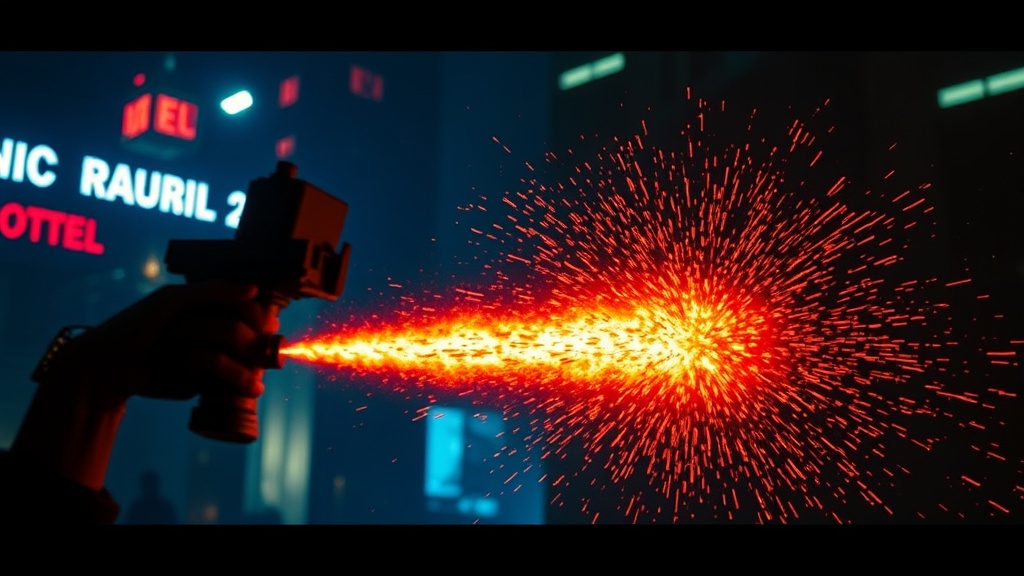
Practical effects introduce a sense of limitation that actually serves the storytelling. When a filmmaker uses real explosions—such as the pyrotechnics used in George Miller’s Mad Max: Fury Road—the scale is defined by the physical reality of the desert. The dust, the flying debris, and the actual heat from the explosions create a visceral reaction in the viewer. You don't just see the chaos; you feel the impact. Because these events are physically happening, the camera can move with more aggression and kinetic energy without the scene looking like a video game.
In Fury Road, the use of real vehicles and high-speed practical stunts provided a level of grit that a purely digital chase could never achieve. The audience knows that the cars are actually hitting the sand and that the actors are truly navigating a dangerous environment. This creates a high-stakes tension that digital rendering, no matter how high the resolution, struggles to mimic.
The Hybrid Approach: The Gold Standard
It is important to clarify that the debate isn't about choosing one over the other. The most effective modern filmmaking utilizes a hybrid approach. The goal should never be to replace reality with CGI, but to use CGI to enhance the reality that is already on set.
The most successful films use practical effects for the "close-up" work—the things the actors touch, the things that are in the foreground, and the things that dictate the lighting of the scene. They then use digital tools to expand the world, clean up wires, or add scale in the background. This is the "invisible" use of CGI. When it is done correctly, the viewer doesn't realize they are looking at a digital effect at all.
- Establish the Base: Build or use a physical set and real props to establish the lighting and physical rules of the world.
- Layer the Digital: Use VFX to add depth, distant landscapes, or to augment the physical elements (e.g., adding digital fire to a real explosion).
- Refine the Texture: Use digital tools to add fine-grain detail, such as skin pores or subtle environmental particles, to the existing physical assets.
A great example of this is the Star Wars franchise. While the newer entries use massive amounts of digital environments, the core of the "feel" remains rooted in the tactile designs of the ships, the lightsaber blades, and the weathered textures of the characters. The digital elements are used to expand the scope, but the physical elements provide the soul.
Why It Matters for the Future of Cinema
As we move further into an era of AI-generated imagery and increasingly sophisticated virtual production tools like The Volume (the LED wall technology used in The Mandalorian), the value of the physical will only increase. While digital sets can provide incredible control over lighting and environments, they still lack the inherent "soul" of a physical space. A physical set has a scent, a temperature, and a specific way that sound bounces off its walls.
For the viewer, the distinction matters because it affects our emotional connection to the story. We want to believe in the worlds we visit. We want to feel the weight of the hero's sword and the heat of the dragon's breath. When filmmakers prioritize the physical, they aren't just making a movie; they are constructing a reality that we can inhabit. The future of great cinema lies in the seamless marriage of the tangible and the digital, ensuring that even as our tools evolve, our sense of wonder remains grounded in something real.